

Football has always been more than just a game. It’s a reflection of society, a mirror that shows us our passions, our tribulations, and sometimes, our darkest impulses. The story of football violence isn’t merely about altercations between rival fans—it’s a complex cultural phenomenon that has shaped the very fabric of the sport we love today. From the terraces of 1970s England to the modern-day digital battlegrounds, the echoes of past conflicts continue to influence how we experience the beautiful game.
The Roots of a Subculture
Where It All Began
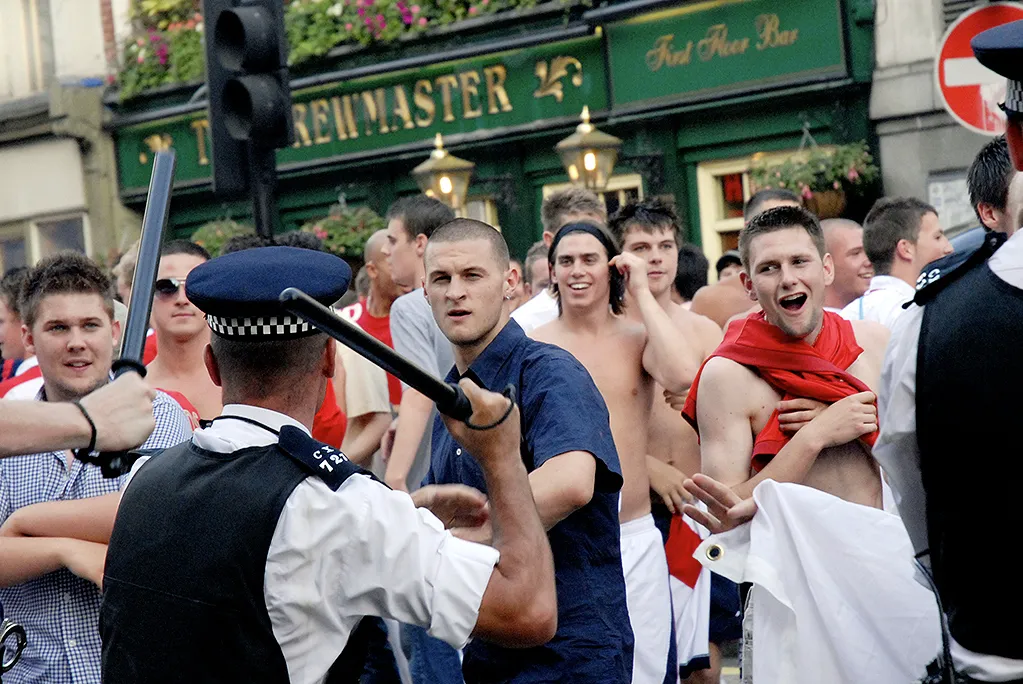
The phenomenon of football-related violence, often sensationalized as “hooliganism,” didn’t emerge overnight. Its roots can be traced back to the post-war era when football became the working-class’s primary source of entertainment and tribal identity. In industrial cities across Britain, supporting a local club wasn’t just a weekend activity—it was a statement of belonging, of territorial pride, and sometimes, of defiance against societal pressures.
According to Dr. James Richardson, a sports historian at Manchester Metropolitan University, “Football violence was never just about the game itself. It was about identity, territory, and the struggle for recognition in a rapidly changing world. The terraces became arenas where young men could assert their presence in a society that often overlooked them.”

The Golden Age of Trouble
The 1970s and 1980s represented the peak of football-related violence in British football. This era saw the rise of organized fan groups, known as “firms,” who would plan confrontations with rival supporters with military precision. The phenomenon wasn’t limited to Britain—similar cultures emerged across Europe, from the ultras of Italy to the hooligans of Germany and the Netherlands.
What’s fascinating is how this subculture developed its own code of conduct, its own language, and its own hierarchy. These weren’t random acts of violence but rather structured confrontations that followed unwritten rules. The media sensationalized these events, often exaggerating their frequency and severity, which ironically fueled the very behavior they condemned.
The Transformation of Football Culture
From Violence to Spectacle
The turning point came in the wake of several tragic incidents, most notably the Heysel Stadium disaster in 1985 and the Hillsborough tragedy in 1989. These events forced football authorities, governments, and clubs to fundamentally rethink how the sport was managed. The introduction of all-seater stadiums, improved security measures, and stricter legislation dramatically changed the landscape of English football.
But the transformation wasn’t just physical—it was cultural. The Premier League’s formation in 1992 marked a shift toward football as a commercial product, appealing to families, corporate sponsors, and international audiences. This rebranding effectively marginalized the violent elements while preserving the passionate core of fandom.
The Modern Fan Experience
Today, attending a football match is radically different from the experience of the 1980s. Krikya recognizes that modern stadiums offer safe, family-friendly environments where the focus is squarely on the beautiful game. Advanced security protocols, CCTV systems, and strict membership schemes have made match-day experiences accessible to everyone.
However, the passionate spirit of football hasn’t been lost—it’s simply evolved. The chanting, the flags, the collective joy of celebrating a goal—all of these remain central to the football experience. What changed was the channeling of that passion away from violence and toward celebration.
The Cultural Legacy That Remains
Music, Film, and Literature
Perhaps surprisingly, the subculture of football violence has left an indelible mark on popular culture. Films like The Football Factory and Green Street Hooligans may have romanticized the violence, but they also captured something authentic about the tribal nature of football allegiance. In literature, works by authors like Dougie Brimson and Colin Blaney have provided insider perspectives on a world that most fans never actually experienced firsthand.
Music, too, bears the imprint of terrace culture. The chants and songs that echo around modern stadiums have their origins in the same working-class communities that produced the violent firms. The wit, the humor, and the creativity of football chants remain one of the sport’s most cherished traditions.
International Adoption and Evolution
What started in Britain has spread globally, though often in very different forms. In South America, barras bravas have developed their own traditions that blend football passion with political and social activism. In Eastern Europe, the ultras culture has become intertwined with nationalist movements. Each region has adapted the basic template of organized fan culture to fit its own social and historical context.
Sports journalist Maria Santos, who has covered football culture across four continents, notes: “The export of English football culture has been one of the most significant cultural exchanges in modern sports history. What’s remarkable is how different countries have taken the basic elements—the songs, the flags, the collective identity—and made them entirely their own.”
Learning from History: The Path Forward
What the Past Teaches Us
The history of football violence offers valuable lessons for the present. It demonstrates that fan culture is not static—it evolves in response to both internal dynamics and external pressures. The measures that successfully reduced violence in British football—improved facilities, better policing strategies, and genuine fan engagement—provide a template for addressing similar issues in other contexts.
The Digital Frontier
Today, the battleground has shifted. While physical confrontations at matches have dramatically decreased, online abuse has become a new challenge. The same tribal instincts that once manifested in terrace fights now find expression in social media harassment, trolling, and toxic online communities. According to Krikya‘s analysis of modern fan behavior, the anonymity of online platforms has created new challenges for clubs and authorities trying to maintain respectful discourse.
Football clubs are now investing heavily in digital monitoring and fan education programs to address this new form of toxicity. The lessons from the 1970s and 1980s remind us that simply condemning behavior isn’t enough—you need to understand its root causes and provide constructive alternatives.
The Beautiful Game Endures
As we look at football today, it’s clear that the sport has successfully navigated one of its most challenging periods. The passion remains, the tribalism persists, and the sense of belonging that fans feel to their clubs is as strong as ever. What changed is how that passion is expressed.
The cultural legacy of football violence is complex—it’s a story of how a sport confronted its demons and emerged stronger. It’s a reminder that football is never just about 22 players kicking a ball; it’s about community, identity, and the human need to belong to something bigger than ourselves.
Modern football fans enjoy a match-day experience that would have been unimaginable to their predecessors in the 1970s. Safe, comfortable, and accessible to all, today’s stadiums welcome families, women, and fans of all ages and backgrounds. This transformation didn’t happen by accident—it was the result of deliberate policy, community engagement, and the recognition that football belongs to everyone.
Your Thoughts Matter
What do you think about the evolution of football fan culture? Have you noticed changes in how supporters behave at matches compared to years past? Share your experiences in the comments below—whether you’ve been following football for decades or are a newer fan, your perspective adds to the rich tapestry of this global sport.
If you found this analysis valuable, consider sharing it with fellow football enthusiasts. And for more in-depth coverage of football culture, history, and the beautiful game’s ongoing evolution, explore our other features here on Krikya. The story of football is still being written, and every fan plays a part in shaping its next chapter.
