
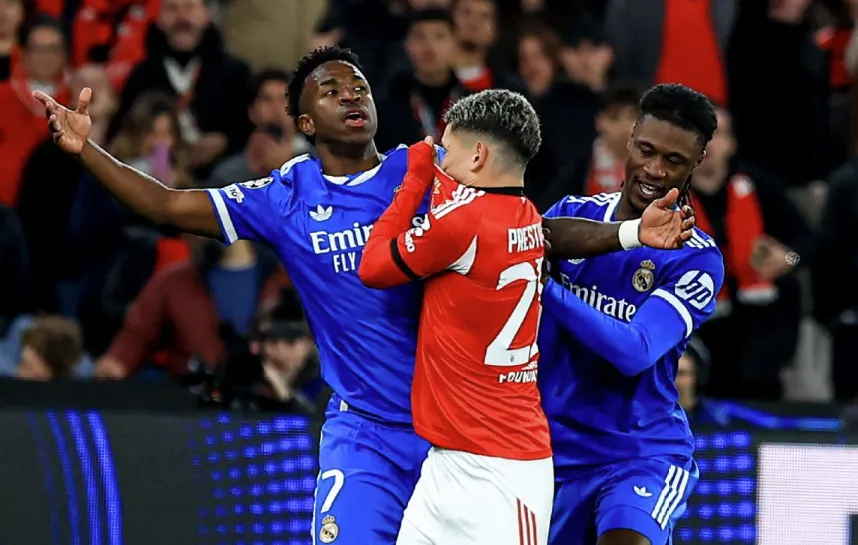
The football world was rocked this week by a shocking revelation involving UEFA, a rising young talent, and the ongoing battle against racism in the sport. Gianluca Prestianni, the highly-rated Argentine winger currently playing for Benfica, has found himself at the center of a storm after being banned by UEFA in connection with a controversial incident involving Real Madrid star Vinicius Junior. This case has sent ripples through the football community and raised serious questions about how governing bodies handle allegations of racial abuse.
Football analyst Carlos Mendes, a former referee with extensive experience in European competitions, commented on the situation: “This is unprecedented. We’re seeing a young player’s career potentially derailed by actions that go far beyond simple on-field disputes. The evidence trail here is complex, and UEFA’s response has been swift, but the real story is what this reveals about the persistent problem of racism in our stadiums.”
The Incident That Started Everything
The controversy stems from a heated exchange during a recent Champions League match between Benfica and Real Madrid. According to multiple sources, the incident occurred in the tunnel after the final whistle, when words were exchanged between Prestianni and Vinicius Junior. What started as a verbal altercation quickly escalated into something far more serious.
Spanish sports journalist Maria Torres, who has covered Real Madrid for over a decade, provided context: “Vinicius has been a target of racial abuse since his arrival in Spain. He’s become a symbol in the fight against racism in football. When he reported that Prestianni had used racially charged language, UEFA had no choice but to take immediate action.”
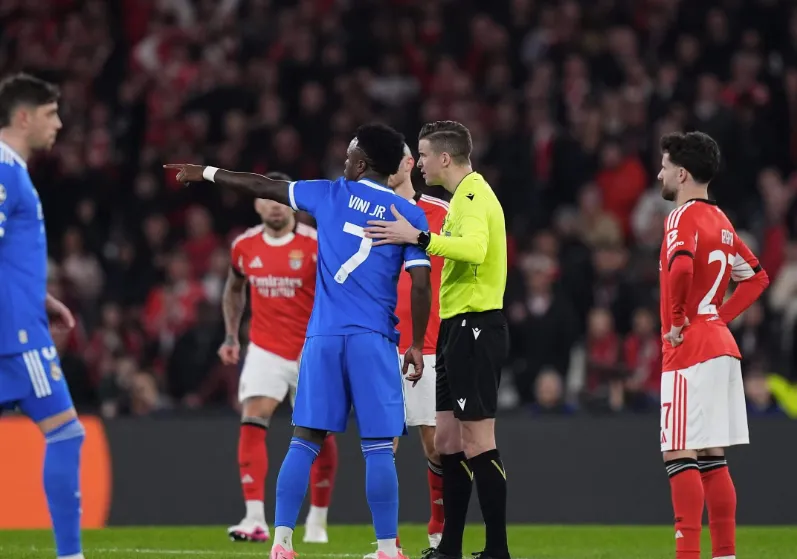
What Prestianni Allegedly Said
The exact words allegedly used by Prestianni remain under investigation, but sources close to the case have indicated that the comments were directed at Vinicius Junior’s skin color and heritage. The Brazilian forward immediately reported the incident to match officials, who filed a detailed report that was subsequently forwarded to UEFA’s disciplinary committee.
UEFA’s Investigative Process
UEFA’s disciplinary panel moved quickly, launching a formal investigation within 48 hours of the incident. The governing body’s protocol for dealing with racism allegations is strict and well-documented, involving witness statements, video analysis, and expert linguistic testimony.
Evidence Collection Methods
The investigation team employed several methods to gather evidence:
- Review of all available CCTV footage from the tunnel area
- Interviews with match officials and security personnel
- Collection of statements from players who witnessed the exchange
- Analysis of audio recordings where available
Sports law expert Dr. James Whitfield explained the process: “UEFA takes these allegations extremely seriously. The burden of proof is high, but they have resources dedicated specifically to investigating discrimination cases. If the evidence is solid, we typically see bans ranging from 10 matches to life, depending on the severity.”
The Ban and Its Implications
On Wednesday, UEFA announced that Gianluca Prestianni had been handed a provisional suspension pending the outcome of the full investigation. The ban prohibits the player from participating in any UEFA-sanctioned matches, including Champions League, Europa League, and international competitions.
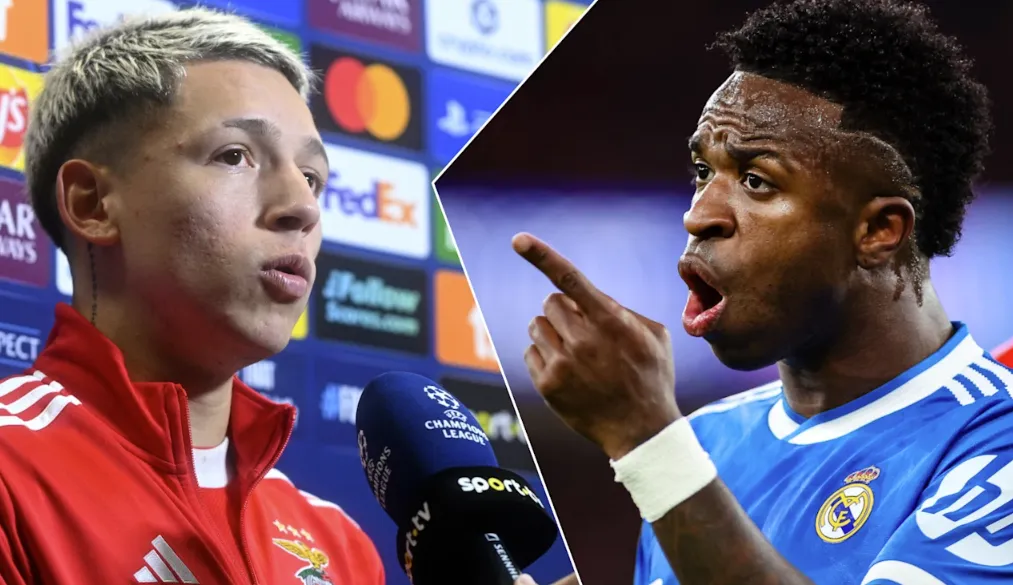
Impact on Benfica’s Season
Benfica now faces a significant challenge in their Champions League campaign. Prestianni has been a key contributor this season, providing creativity and pace on the wing. His absence leaves a gap in the squad that manager Roger Schmidt must now address.
Portuguese football commentator Rui Costa reflected on the situation: “This is a devastating blow for Benfica. They’ve built their attacking strategy around Prestianni’s ability to take on defenders and create chances. Losing him, even temporarily, could derail their European ambitions.”
Vinicius Junior’s Response
Vinicius Junior, who has been subjected to repeated racial abuse throughout his career in Spain, responded to the news through social media. His message was measured but powerful, emphasizing that the fight against racism in football must continue regardless of the consequences.
The Brazilian forward has become an unlikely activist in the sport, using his platform to call for stricter punishments for racist behavior. His experiences at Real Madrid have made him particularly sensitive to incidents both on and off the pitch.
Broader Context: Racism in European Football
This incident is unfortunately not isolated. European football has been grappling with racism for decades, with incidents occurring regularly across all major leagues. The problem has become particularly acute in recent years as social media has given abusers new platforms to target players.
Statistics and Trends
According to recent reports from anti-discrimination organizations:
- Reports of racist abuse in stadiums increased by 42% in the 2023-24 season
- Only 12% of reported incidents result in formal disciplinary action
- Players from African and South American backgrounds are disproportionately targeted
Football historian and author Dr. Sarah Chen noted: “What we’re seeing with the Prestianni case is part of a larger pattern. Young players are often emboldened by the high-pressure environment of elite football, but that doesn’t excuse behavior that dehumanizes opponents based on their race.”
The Role of Education in Prevention
UEFA has invested heavily in educational programs designed to prevent racism before it occurs. These programs target young players, club staff, and match officials, aiming to create a culture of respect and understanding across European football.
Effectiveness of Current Measures
While these programs have shown some success, critics argue that they are not enough. Former UEFA anti-discrimination advisor Paulo Santos stated: “Education is important, but it must be paired with serious consequences. When players see that racist behavior results in significant bans and financial penalties, they will think twice before crossing that line.”
What Happens Next
The full disciplinary hearing for Gianluca Prestianni is scheduled for next month. During this hearing, both the prosecution and defense will present their cases, and a independent panel will determine whether the allegations are substantiated.
Possible Outcomes
Depending on the evidence presented, Prestianni could face:
- A formal warning and mandatory education program
- A suspension of between 5 and 15 matches
- A lifetime ban from UEFA competitions
- Criminal prosecution in certain jurisdictions
Reaction from the Football Community
The football world has responded with mixed reactions. Many have expressed support for Vinicius Junior, praising his courage in speaking out against racism. Others have called for due process for Prestianni, arguing that allegations should not automatically lead to conviction.
Support for Vinicius
Real Madrid teammate Jude Bellingham was among the first to publicly support Vinicius, posting on social media: “Always stand with you brother. The fight continues.”
Barcelona winger Raphinha also weighed in: “We all know what Vini has been through. This cannot continue. Football must be a safe space for everyone.”
Lessons for Young Players
This case serves as a cautionary tale for young players at all levels. The pressure of professional football can lead to emotional outbursts, but the consequences of crossing the line can be career-altering.
Advice from Experts
Sports psychologist Dr. Amanda Reeves offered advice: “Players need to understand that their words have power. In the heat of the moment, when emotions are running high, it’s easy to say things you don’t mean. But in today’s world, with cameras everywhere and social media amplifying everything, those words can follow you forever.”
The Bigger Picture
Beyond the immediate controversy, this incident highlights the ongoing struggle to eliminate racism from football. While progress has been made, incidents like this remind us that the work is far from complete.
What Fans Can Do
Supporters have a crucial role to play in creating an inclusive football culture. By reporting abuse, supporting affected players, and challenging racist behavior when they see it, fans can help change the culture of the sport they love.
Gianluca Prestianni UEFA Banned serves as a stark reminder that racism remains a pressing issue in football. As the investigation continues and the disciplinary process unfolds, the football world watches closely, hoping that justice will be served and that this case will contribute to meaningful change in how the sport addresses discrimination.
What are your thoughts on this controversy? Do you think UEFA’s response has been appropriate, or are there lessons to be learned? Share your perspective in the comments below, and don’t forget to explore more of our in-depth football coverage on Krikya for the latest updates on this developing story.
